
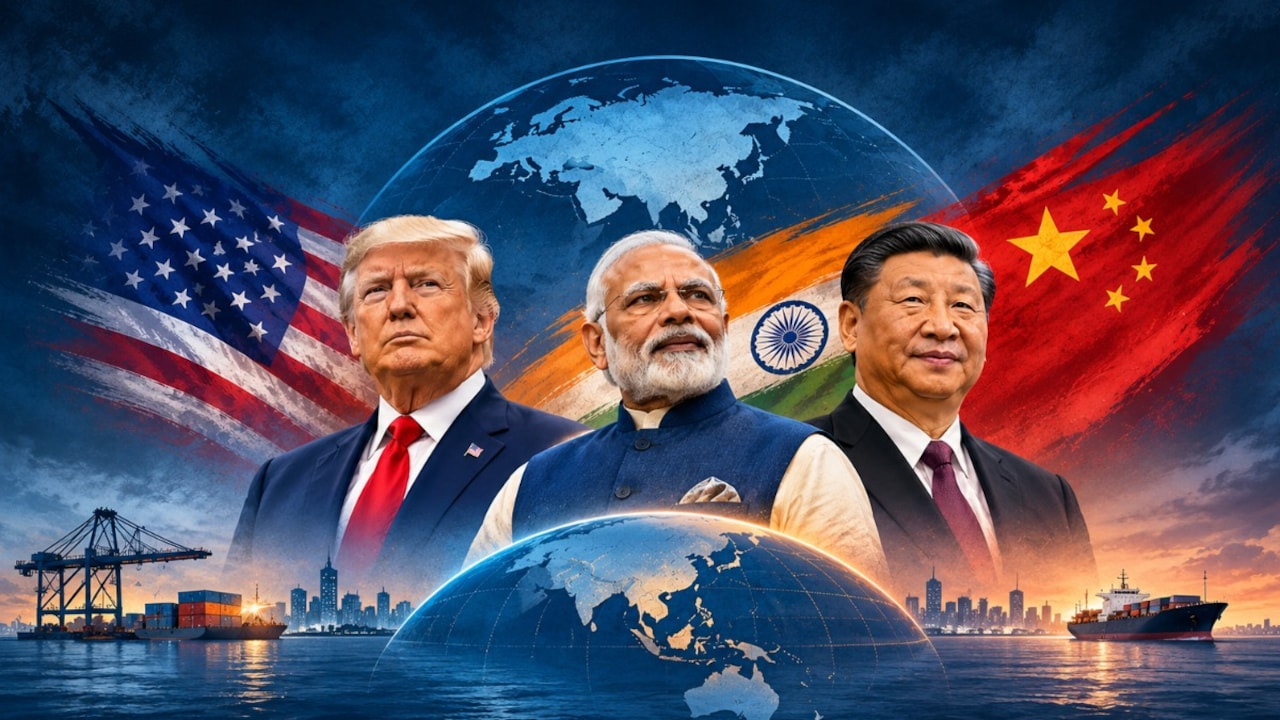
India’s growing regional influence contrasts with weaker economic capability, highlighting the challenge of converting resources into lasting strategic power.
Key Highlights
- India retained third place in the Lowy Institute’s Asia Power Index 2026, with its overall score rising to 40.5.
- The United States and China remained the two leading powers, with scores of 78.9 and 73.6 respectively.
- India’s strongest improvement was recorded in cultural influence, which increased by 2.3 points to 43.8.
- Defence networks gained 2.1 points, supported by stronger regional engagement and BrahMos missile sales to Southeast Asian countries.
- Economic capability declined by 0.7 points, while future resources improved to 56.2, reflecting stronger long-term prospects.
- Expert assessments of Prime Minister Narendra Modi’s regional leadership improved, although concerns were noted about India's diplomatic profile during the Gulf conflict.
India Consolidates Its Position in Asia’s Power Structure
India has retained its position as Asia’s third-most powerful country in the Lowy Institute’s Asia Power Index 2026, with its influence across the region expanding despite a decline in relative economic capability.
The latest edition of the annual assessment, released on November 22, gave India an overall score of 40.5 out of 100, an increase of 0.5 points from the previous year. The United States continued to lead the rankings with 78.9 points, followed by China at 73.6. Japan secured fourth place with 38.6 points.
The findings suggest that India’s regional position has been strengthened through a combination of diplomatic engagement, defence cooperation, cultural reach and relatively stable economic relationships. However, the country continues to face a substantial gap in comprehensive power compared with the United States and China.
The report, authored by Hunter Marston and Jack Sato, also noted that the power gap between India and China had narrowed to its smallest level since the index was introduced in 2018. Despite this improvement, China’s overall power remained approximately 80 per cent higher than India's.
For New Delhi, the assessment presents two parallel realities: its regional influence is expanding, but the economic and strategic resources needed to sustain that influence remain uneven.
What Does the Lowy Asia Power Index Measure?
Published annually by the Australian think tank Lowy Institute, the Asia Power Index assesses the ability of countries to shape their external environment and influence developments across Asia.
The 2026 edition evaluates 27 countries and territories through 131 indicators grouped under eight measures of power:
- Economic capability
- Military capability
- Resilience
- Future resources
- Economic relationships
- Defence networks
- Diplomatic influence
- Cultural influence
These measures examine both the resources available to a country and the extent to which those resources can be converted into influence.
Economic and military capabilities indicate the material strength of a state. Resilience and future resources assess its ability to withstand external pressures and sustain its position over time. Diplomatic networks, defence partnerships, trade relations and cultural engagement indicate how effectively that strength is projected beyond national borders.
The index is therefore not simply a measure of military strength or economic size. A country may possess substantial resources but still face difficulties in translating them into regional influence.
Economic Capability Declines Despite Stronger Future Prospects
One of the most significant findings for India was the decline in its Economic Capability score, which fell by 0.7 points to 26.4. India nevertheless retained third place in this category.
The decline was attributed partly to a weakening rupee and a structural change in the International Monetary Fund’s method of measuring economies. Both factors affected India's relative GDP standing. A nearly $20 billion decline in outbound investment also added to the pressure.
The finding should not be interpreted as evidence of an economic contraction. The index measures comparative economic capability and a country's position against other regional economies. Changes in currency valuation and measurement methodology can affect the assessment even when domestic economic activity continues to expand.
A more encouraging picture emerged in the Future Resources category. India's score increased by 1.2 points to 56.2, supported by an improved economic forecast.
This measure considers the resources that countries are expected to command in the coming decades, including projected economic and defence capabilities and demographic potential.
The contrast between current economic capability and future resources is important. India’s long-term prospects remain substantial, but these opportunities will have to be converted into higher productivity, industrial competitiveness, technological advancement and stronger investment flows.
The challenge will be to ensure that demographic potential and economic growth translate into greater influence over regional trade, investment and strategic decisions.
Defence Networks Strengthened Through Southeast Asian Engagement
India recorded a notable improvement in Defence Networks, with its score rising by 2.1 points to 18.6. Its position in this category improved by two places to ninth.
Greater regional defence engagement and BrahMos missile sales to Southeast Asian countries were identified as important contributors to this improvement.
The development reflects the growing importance of defence diplomacy in India's Indo-Pacific engagement. Security cooperation is increasingly being pursued through joint military exercises, defence consultations, equipment transfers and partnerships with countries across Southeast Asia.
The BrahMos missile programme has added a commercial and strategic dimension to these relationships. Defence exports can create longer-term cooperation between countries, including training, maintenance, technical support and military engagement.
India's Military Capability score also improved by 0.5 points to 48.5, keeping it in fourth place.
However, military capability and defence networks measure different aspects of national power. The former assesses a country's own military resources, while the latter examines the strength of its security relationships and partnerships.
The improvement in both areas indicates that India's regional defence presence is being shaped not only by its armed forces but also by its expanding engagement with partner countries.
Cultural Influence Records the Strongest Improvement
Among the eight measures, India's largest improvement was recorded in Cultural Influence. Its score increased by 2.3 points to 43.8.
The gains were driven by improvements across cultural projection, information flows and people-to-people exchanges.
India's cultural presence extends through its cinema, entertainment industry, educational connections, diaspora networks, tourism, cuisine and traditional cultural practices. These channels have helped expand the country's visibility and engagement across the region.
People-to-people relationships are particularly relevant in South and Southeast Asia, where historical, linguistic, religious and commercial connections have shaped regional interactions over generations.
Cultural influence, however, should not be confused with economic or diplomatic power. A strong cultural presence can improve perceptions and public engagement, but it does not automatically translate into political support, trade advantages or strategic cooperation.
The latest findings nevertheless underline the growing role of cultural engagement in India's wider regional presence.
Diplomatic Influence Remains India’s Strongest Measure
Diplomatic Influence continued to be India's strongest category, with a score of 70.3. The assessment remained broadly stable, even as diplomatic influence weakened across several other countries.
The report recorded improved expert assessments of Prime Minister Narendra Modi's regional leadership. However, perceptions of his global leadership and strategic ambition were assessed less favourably.
This distinction is important. India's engagement with neighbouring countries and its wider Asian partnerships may be viewed differently from its diplomatic positioning during international crises.
The Lowy Institute referred to India's relatively low diplomatic profile during the Gulf conflict as one factor affecting assessments of its global leadership. It cited India's response after a US submarine sank an Iranian naval vessel returning from an exercise hosted by India.
The episode highlighted the diplomatic pressures faced by New Delhi when relationships with multiple strategic partners intersect during a crisis.
India's approach of strategic autonomy requires it to maintain working relationships with different powers while protecting its national interests. However, the ability to maintain this balance is increasingly being tested by conflicts, geopolitical competition and shifting regional alignments.
The report therefore presents a mixed picture: India's regional diplomatic engagement has remained relatively resilient, but its global positioning continues to face challenges.
Stable Trade Relationships Provide an Advantage
India's Economic Relationships score remained unchanged, but its relative position improved by two places to seventh.
The category assesses the strength of trade relations, investment connections and economic engagement with other countries. India was among only five countries whose economic relationships did not weaken in the latest assessment.
This relative stability is significant at a time when supply-chain disruptions, geopolitical tensions and trade restrictions are reshaping economic relationships across Asia.
For India, stronger commercial ties can support market access, attract investment and create longer-term partnerships in manufacturing, infrastructure, energy and technology.
However, seventh place also indicates that the country's economic influence remains below its overall standing in the index. Greater regional trade integration and stronger investment connections will be necessary if its expanding strategic presence is to be supported by equally strong commercial relationships.
US-China Competition Continues to Shape Asia
Beyond India's position, the 2026 index highlights a changing balance between the United States and China. Their overall scores were separated by just 5.3 points, the narrowest gap recorded since the index began in 2018.
The report attributed much of this narrowing to setbacks in Washington rather than a dramatic expansion of Beijing's position. The United States recorded a significant decline in diplomatic influence, linked to the Iran conflict, trade tariffs and strained relations with regional partners.
China, meanwhile, continued to maintain substantial economic, military and diplomatic resources. Its technological progress and regional engagement have also remained important elements of the wider competition.
Despite the narrowing gap, the regional power structure was described as markedly bipolar. The United States and China continue to dominate, while no coherent grouping of middle powers has emerged to displace their influence.
For India, this environment presents both opportunities and challenges. Its partnerships with the United States, Russia, Japan, Australia and Southeast Asian countries provide room to protect its strategic autonomy. At the same time, intensifying competition between Washington and Beijing requires careful diplomatic management.
India's ability to maintain independent partnerships while contributing to regional stability will remain an important factor in its future influence.
The Road Ahead for India
The Lowy Institute's 2026 assessment presents India as a country whose regional influence is expanding, but whose power remains uneven across economic, military and diplomatic measures.
Improvements in cultural influence, defence networks and future resources have strengthened India's overall position. Stable economic relationships and continued diplomatic engagement have also helped the country consolidate its status as a major Asian power.
However, the decline in economic capability highlights a continuing challenge. Strategic ambitions cannot be sustained through diplomatic outreach and defence partnerships alone. They must be supported by industrial development, technological competitiveness, stronger investment flows and deeper economic integration.
India's future influence will also depend on how effectively it responds to regional crises and manages relationships with competing global powers. Its ability to convert demographic potential and economic growth into durable strategic resources will be particularly important.
The 2026 Asia Power Index therefore offers a mixed but significant assessment of India's regional trajectory. Its influence has expanded across several areas, while economic and diplomatic challenges remain substantial. The larger test will be whether this growing regional engagement can be converted into lasting economic strength and strategic leverage.
Share this Perspective
Spread rigorous policy evaluation across your professional networks.