
Nagaland seeks wider relief from foreign visitor permits, arguing that security safeguards and tourism-led growth must move together.
Key Highlights
- What is PAP? The Protected Area Permit regulates the entry of foreign nationals into designated sensitive and border areas under the Foreigners (Protected Areas) Order, 1958.
- Why does Nagaland want it withdrawn? The state argues that the permit process discourages international tourism, investment, business engagement and cultural exchange.
- What has the Centre allowed? A 10-day annual relaxation from December 1 to 10 during the Hornbill Festival.
- What is the latest demand? Chief Minister Neiphiu Rio has sought a month-long relaxation for the 2026 festival and a year-round exemption for foreign tourists.
A Policy Debate Ahead of Hornbill
Nagaland's demand for the withdrawal of the Protected Area Permit (PAP) regime has brought an important policy question into focus: how can India protect its sensitive border regions while allowing states to pursue tourism, investment and international cooperation?
The issue has gained fresh attention ahead of the Hornbill Festival, Nagaland's flagship cultural event, scheduled to be held from December 1 to 10, 2026, at Kisama Heritage Village near Kohima.
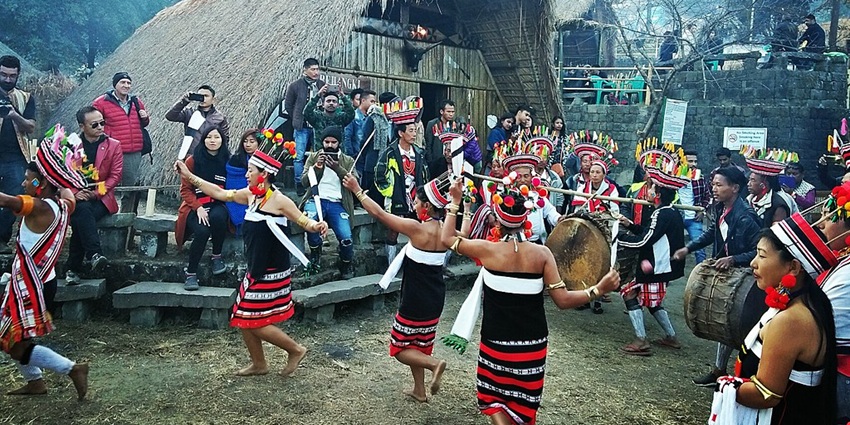
The festival has become one of the most recognised cultural events in Northeast India. It brings together the traditions of Naga tribes and communities, attracts visitors from across the country and abroad, and provides a platform for local artists, entrepreneurs, artisans and tourism operators.
However, the Nagaland government believes that restrictions on foreign visitors are limiting the state's wider economic potential. It has repeatedly asked the Union government to withdraw the PAP regime, which was reintroduced in December 2024.
The Centre has now allowed a limited relaxation during the Hornbill Festival. But the state government has argued that a 10-day exemption does not address the larger problem. It wants foreign tourists to be able to visit Nagaland throughout the year without the additional permit requirement.
The debate, therefore, extends beyond a festival or a tourism policy. It raises questions about national security, Centre–State relations, border management and the development of one of India's culturally distinctive regions.
What Is the Protected Area Permit?
The Protected Area Permit is an authorisation issued by the Government of India to foreign nationals seeking to visit areas notified as protected under the Foreigners (Protected Areas) Order, 1958.
The order was issued under the Foreigners Act, 1946. It provides a regulatory framework for controlling the movement of foreign nationals in strategically sensitive regions, particularly areas located close to India's international borders.
Nagaland falls within this protected area framework. Foreign visitors are therefore required to obtain the necessary permit, in addition to holding a valid Indian visa, unless a specific exemption applies.
The system is intended to help authorities regulate and monitor the movement of foreign nationals in locations where security, border management and strategic considerations remain important.
The PAP regime is not unique to Nagaland. It also applies to other designated areas in the Northeast and parts of certain other states. The exact geographical coverage depends on the relevant government notification.
PAP and ILP: What Is the Difference?
The Protected Area Permit is often confused with the Inner Line Permit. However, the two systems serve different purposes and apply to different categories of visitors.
Basis | Protected Area Permit (PAP) | Inner Line Permit (ILP) |
Applicable to | Foreign nationals | Indian citizens from outside the state |
Legal framework | Foreigners (Protected Areas) Order, 1958 | Bengal Eastern Frontier Regulation, 1873 |
Main purpose | Regulates foreign nationals' access to notified sensitive areas | Regulates entry of Indian citizens into protected states |
Authority | Central government and delegated authorities | Relevant state authorities |
Application in Nagaland | Applies to foreign visitors, subject to notified exemptions | Applies to domestic visitors from other Indian states |
The distinction is important because Nagaland's present demand concerns the PAP regime for foreign nationals. It does not seek the abolition of the Inner Line Permit system.
The ILP remains an important part of the state's administrative and cultural framework. It is intended to protect the identity, land and customary interests of indigenous communities while regulating the entry of Indian citizens from other states.
In other words, the PAP debate is about foreign visitors and national security, while the ILP concerns the entry of Indian citizens into designated states.
How Did the PAP Regime Return?
The present dispute has its roots in a series of policy decisions taken over more than a decade.
In 2011, the Centre relaxed the Protected Area Permit requirement for Nagaland, Manipur and Mizoram. The move was intended to encourage tourism, facilitate foreign visitors and improve economic engagement in the Northeast.
The relaxation was extended through subsequent government orders. During this period, foreign tourists could visit the three states without obtaining a separate PAP, subject to applicable conditions and registration requirements. Certain categories of foreign nationals continued to require prior approval from the Ministry of Home Affairs.
The policy reflected an attempt to balance security oversight with the developmental needs of the region.
However, in December 2024, the Ministry of Home Affairs withdrew the relaxation granted to Nagaland, Manipur and Mizoram. The decision was taken against the backdrop of security concerns in the border areas of these states.
With the withdrawal, the entire state of Nagaland again came under the Protected Area regime. Foreign nationals were required to obtain the necessary permit before visiting the state, subject to any subsequent exemption announced by the Centre.
The decision created difficulties for Nagaland's tourism sector. The state had spent years promoting itself as an accessible destination for international visitors, cultural exchanges and investment. The return of the permit requirement raised concerns among tourism operators, local businesses and the state government.
For Nagaland, the central question was whether a regulatory arrangement designed for sensitive border areas should continue to apply in the same manner despite the state's own assessment of its security and development requirements.
Why Is Nagaland Seeking PAP Withdrawal?
The state government's argument is primarily economic and developmental. It believes that the PAP regime, particularly its year-round application, makes it harder to attract foreign tourists, investors and international partners.
1. Tourism and the Local Economy
Tourism has emerged as an important source of income for communities across Nagaland. Hotels, homestays, restaurants, transport operators, guides, handicraft sellers and local performers depend on visitors.
The Hornbill Festival provides an important platform for these activities. However, its economic benefits are not limited to the ten days of celebrations.
Foreign tourists often plan their journeys several weeks or months in advance. Many may wish to arrive before the festival, explore other destinations and remain in the state after the celebrations conclude.
A restricted exemption around the festival dates may therefore make travel planning difficult.
The state government has argued that international visitors should be able to explore Nagaland throughout the year rather than being encouraged to visit only during a short festival window.
The concern is particularly relevant for smaller tourism businesses. A predictable travel environment helps operators plan accommodation, transport, local tours and other services. Uncertainty over permit requirements can discourage visitors from including Nagaland in a wider Northeast itinerary.
2. Investment and Business Opportunities
The debate also extends beyond tourism.
Nagaland wants to attract investors, business delegations, foreign companies and development partners. Such engagements may involve meetings with government departments, visits to project sites, discussions with local entrepreneurs and the exploration of business opportunities.
The state government believes that additional permit requirements can create uncertainty for people who need to travel at short notice or make repeated visits.
For a state seeking investment in tourism, hospitality, agriculture, food processing, handicrafts and other emerging sectors, ease of movement can influence business decisions.
The government has therefore sought exemptions for foreign corporate representatives, investors and business delegations, along with other stakeholders involved in legitimate economic activities.
3. Cultural Exchange and International Cooperation
Nagaland's cultural identity is one of its strongest assets.
The state is home to several Naga tribes, each with distinct traditions, languages, festivals, crafts and community practices. The Hornbill Festival brings these traditions together and presents them to a wider audience.
International cultural exchanges, artistic collaborations, academic engagement and tourism partnerships can help local communities reach new audiences.
The state government argues that a restrictive permit framework may discourage such engagement, particularly when foreign participants are expected to attend events, workshops or collaborative programmes outside the festival period.
A more predictable system could help cultural institutions, educational organisations and international partners plan exchanges well in advance.
4. Employment and Opportunities for Young People
Tourism-led growth can create opportunities for young people in hospitality, travel management, event organisation, local transport, food services, cultural production and entrepreneurship.
The state government has connected the PAP issue with employment generation and the economic aspirations of Naga youth.
Its argument is that international tourism should be treated as a year-round economic activity rather than an occasional event.
For a state where local entrepreneurship and service-sector opportunities are important to future development, restrictions on foreign movement can have consequences beyond the tourism industry itself.
What Has the Nagaland Assembly Demanded?
The demand for withdrawal of the PAP regime has received political support within the state.
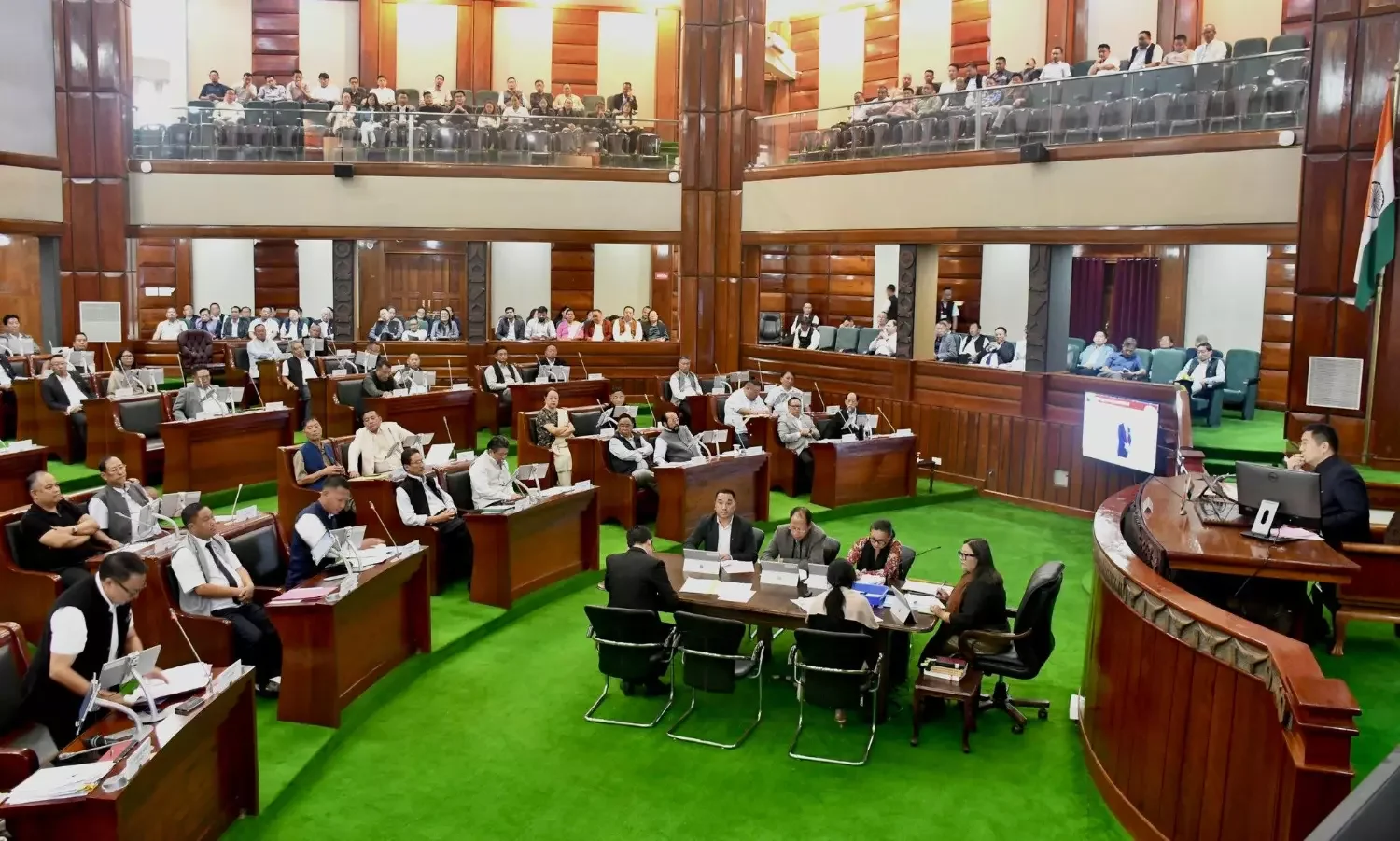
On September 3, 2026, the Nagaland Legislative Assembly unanimously adopted a government resolution asking the Centre to urgently review and withdraw the permit regime or restore the earlier relaxation.
The resolution was moved by Deputy Chief Minister Yanthungo Patton.
The Assembly highlighted the state's potential in tourism, culture, investment, entrepreneurship and international engagement. It also noted that tourism, along with the service and creative sectors, was becoming an important source of employment and livelihood, particularly for young people.
The resolution raised concerns that the continued application of PAP was creating obstacles to international tourism, business engagement, cultural exchange and investment.
Importantly, the Assembly did not dismiss the need for national security.
It reaffirmed the state government's commitment to security and proposed that appropriate systems for the registration, regulation and monitoring of foreign nationals could be developed through modern technology and close coordination with central agencies.
The resolution reflected the state's attempt to present the issue as a question of administrative reform rather than a rejection of security requirements.
Chief Minister Neiphiu Rio also made a detailed case before the Assembly. He argued that security and development need not be treated as opposing objectives and that regulations should respond to changing circumstances.
The state subsequently continued its discussions with the Centre ahead of the Hornbill Festival.
Centre's Response: A Limited Relaxation
The Union government has not agreed to the complete withdrawal sought by Nagaland. However, it has provided a limited relaxation for the Hornbill Festival.
The Ministry of Home Affairs has allowed the Protected Area regime to be relaxed in Nagaland from December 1 to 10 every year, coinciding with the festival.
The decision provides some relief to international visitors planning to attend the event. It also acknowledges the festival's role in tourism, cultural exchange and the state's economy.
However, the relaxation is limited by time. It does not amount to a complete withdrawal of the PAP regime from Nagaland.
Foreign nationals seeking to visit the state outside the notified relaxation period remain subject to the applicable permit requirements. Other visa, immigration and security rules also continue to apply.
For the state government, this arrangement addresses only a part of the problem. Tourism operators and international visitors may still face difficulties when planning longer journeys or visiting Nagaland at other times of the year.
The state has therefore continued to press for a wider exemption.
Why Has Chief Minister Neiphiu Rio Asked for More?
Following the Centre's decision, Chief Minister Neiphiu Rio made a fresh appeal to Union Home Minister Amit Shah on November 12, 2026.
While welcoming the 10-day relaxation, Rio argued that it was insufficient to meet the state's broader economic and developmental requirements.
He requested that the exemption for the 2026 Hornbill Festival be extended to at least one month, from November 15 to December 15.
He also reiterated the demand for a year-round exemption for foreign tourists visiting Nagaland.
The Chief Minister pointed out that international visitors generally plan their itineraries well in advance. Many arrive before the festival and remain afterwards to explore the state's cultural heritage and tourist destinations.
A ten-day relaxation, therefore, may not provide the certainty required by tourists, travel agencies, tour operators and hospitality businesses.
Rio also sought exemptions for foreign investors, corporate representatives, business delegations, sportspersons, coaches, diplomats and representatives of international partner organisations.
The request has an additional dimension. Nagaland is seeking to expand its sporting and international engagements, and foreign players and associated personnel may need to enter the state for competitions and professional activities.
These requests indicate that the state wants the PAP debate to be considered as part of a wider strategy for economic development and international cooperation.
As of November 13, 2026, the Centre's 10-day annual relaxation remains the announced arrangement. The state's fresh request for a longer exemption in 2026 and year-round relief for foreign tourists is awaiting further consideration.
Hornbill Festival: More Than a Cultural Celebration
The Hornbill Festival has become central to Nagaland's tourism identity.
First organised in 2000, the festival is held annually at Kisama Heritage Village, near Kohima. It brings together the traditions and cultural expressions of different Naga tribes through music, dance, food, handicrafts, sports and other activities.
The event is often described as a showcase of Naga culture. It also provides a commercial platform for local producers, artisans, performers and small businesses.
The festival attracts visitors from across India and abroad. Its annual footfall has been reported at more than one lakh visitors, making it an important event in the state's tourism calendar.
Its importance is not limited to tourism revenue. It also helps create visibility for Nagaland's cultural heritage and gives local communities opportunities to engage with visitors, businesses and international partners.
The state has increasingly sought to use the festival as a platform for investment discussions, cultural diplomacy and creative-sector collaboration.
However, the benefits of such an event depend partly on the ease with which visitors can enter, travel and stay in the state.
This is why the PAP issue has become particularly prominent ahead of the 2026 edition.
The Centre's Security Concerns Cannot Be Ignored
While Nagaland has emphasised the economic consequences of the permit regime, the Centre's concerns must also be considered.
The Northeast shares sensitive international borders, and several areas in the region have strategic importance. The movement of foreign nationals in such locations can raise concerns related to border management, illegal activities, intelligence gathering and internal security.
The December 2024 decision was taken after the Ministry of Home Affairs cited security concerns in the border areas of Nagaland, Manipur and Mizoram.
A permit system provides authorities with a mechanism to regulate and monitor foreign visitors. Its removal would therefore require confidence that alternative arrangements could adequately address the risks.
The issue is not simply whether Nagaland is peaceful or whether tourism should be encouraged. It is also about the responsibilities of the Union government in managing international borders and the movement of foreign nationals.
At the same time, security measures need to be proportionate, transparent and responsive to changing conditions. A framework designed for sensitive border areas should not automatically become an unnecessary obstacle to legitimate tourism, business and cultural exchange.
The challenge is to distinguish between genuine security requirements and procedural restrictions that may be addressed through better administration.
Can Technology Provide an Alternative?
One possible way forward is to strengthen monitoring systems without placing unnecessary burdens on genuine visitors.
Nagaland's Assembly resolution has referred to the use of modern technology and coordination with central agencies for the registration and monitoring of foreign nationals.
A more efficient system could include:
- Advance digital registration: Foreign visitors could submit their travel details before arriving in India or entering Nagaland.
- Integrated verification: The permit process could be linked with existing visa and immigration databases, reducing repeated documentation.
- Time-bound approvals: Applications could be processed within a clearly defined period, allowing tourists and business delegations to plan their journeys.
- Risk-based monitoring: Additional scrutiny could be applied to sensitive locations or specific categories of travel rather than imposing unnecessary delays on every visitor.
- Coordination with state authorities: Local police, tourism departments, immigration officials and central security agencies could share relevant information through established channels.
- Transparent visitor guidelines: Clear information on eligibility, documentation, application timelines and exemptions could reduce confusion among international travellers.
Such measures would not eliminate the need for security checks. Instead, they could make the process more predictable while allowing authorities to retain oversight.
Any alternative, however, would need to be approved by the Union government and supported by an effective security assessment.
What Is at Stake for India's Northeast?
The PAP debate has implications beyond Nagaland.
The Northeast has significant potential in tourism, agriculture, horticulture, handicrafts, sports, education and cross-border economic engagement. Its cultural diversity and natural landscape also provide opportunities for international tourism.
However, the region's development requires more than infrastructure and promotional campaigns. Ease of access, reliable administration, local participation and investor confidence are equally important.
Nagaland's demand highlights a broader policy challenge: how can India encourage economic integration in border states while maintaining the security arrangements considered necessary for those regions?
A balanced approach could help strengthen both objectives.
For Nagaland, a predictable permit framework could support tourism operators and local entrepreneurs. For the Centre, a digitally monitored system could preserve oversight of foreign movement.
The wider lesson is that national security and regional development need not always be treated as competing priorities. With clear rules, better coordination and periodic reviews, administrative arrangements can be designed to serve both.
The Way Forward: A Balanced Policy Framework
The immediate decision rests with the Ministry of Home Affairs. The state government has sought a longer relaxation for the 2026 festival and a broader exemption for foreign tourists throughout the year.
A practical way forward could involve a phased approach.
First, the Centre could consider the state's request for a month-long relaxation during the 2026 Hornbill Festival, while assessing the security implications.
Second, a year-round exemption for ordinary foreign tourists could be examined through a monitored pilot arrangement. Such an arrangement could include advance registration, digital verification and clear reporting requirements.
Third, separate and transparent provisions could be considered for investors, business delegations, sportspersons, diplomats and international development partners.
Finally, the PAP framework should be reviewed periodically in consultation with the state government, security agencies, tourism stakeholders and local communities.
This would ensure that the system remains responsive to both security conditions and changing economic requirements.
Security and Development Must Move Together
Nagaland's demand for the withdrawal of the Protected Area Permit regime reflects a larger aspiration to open the state to tourism, investment and international cooperation.
The Centre's decision to permit a 10-day relaxation during the Hornbill Festival is a limited but significant step. However, the state's fresh request shows that the larger disagreement remains unresolved.
A complete withdrawal of the regime cannot be treated as a purely economic decision, given the security responsibilities involved. Equally, security arrangements should be periodically assessed to ensure that they do not impose avoidable barriers on legitimate visitors and businesses.
The way forward lies in a system that protects India's strategic interests while allowing Nagaland to participate more fully in the country's tourism and development ambitions.
For the state, the objective is not merely to welcome more visitors during ten days of December. It is to make Nagaland a destination that people can visit, invest in and engage with throughout the year.
Share this Perspective
Spread rigorous policy evaluation across your professional networks.